


Karnataka Chief Minister Siddaramaiah has formally urged his Kerala counterpart Pinarayi Vijayan to withdraw the proposed Malayalam Bhasha Bill, 2025, warning that it could undermine the constitutional linguistic rights of Kannada speakers in the Kasargod border district. The appeal follows growing concerns that the legislation, which seeks to make Malayalam the compulsory first language in all schools, including Kannada-medium institutions, could place an undue burden on children of linguistic minorities and disrupt long-standing educational practices.
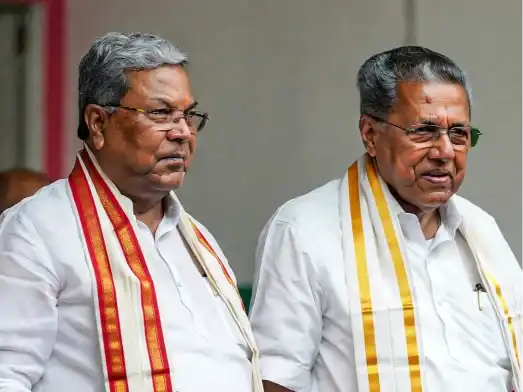
In a detailed letter and posts on social media, Siddaramaiah argued that while Kerala has every right to promote Malayalam with pride, “promotion cannot become imposition,” stressing that India’s unity is rooted in respecting every language and a citizen’s right to learn in their mother tongue. He said such a blanket language requirement, especially in border regions where generations have relied on Kannada-medium education could weaken minority-run schools, limit academic options, and contravene constitutional provisions protecting linguistic minorities.
Citing Articles 29, 30, 350A and 350B of the Constitution, Siddaramaiah underscored that policies must reflect not just legal validity but constitutional morality and respect for multilingual coexistence. He noted that border districts like Kasaragod historically embody linguistic plurality, with Malayalam, Kannada, Tulu and other languages thriving side by side.
The Karnataka government, backed by the Karnataka Border Areas Development Authority, has also appealed to Kerala Governor Rajendra Vishwanath Arlekar to withhold assent to the Bill and ensure that the interests of Kannada-speaking residents are safeguarded. Siddaramaiah warned that if the Bill proceeds unchanged, Karnataka will oppose it using all constitutional avenues available, reaffirming its commitment to protecting linguistic minorities and the plural ethos of the Republic.
The proposed Malayalam Bhasha Bill is part of Kerala’s ongoing efforts to strengthen Malayalam in education and administration, but its reception has sparked fresh debate between the neighbouring states over language rights and regional identity.
