


Germany and India are finalizing the terms of a submarine manufacturing agreement valued at over $8 billion, which would become New Delhi’s largest-ever defense deal, according to sources familiar with the discussions.
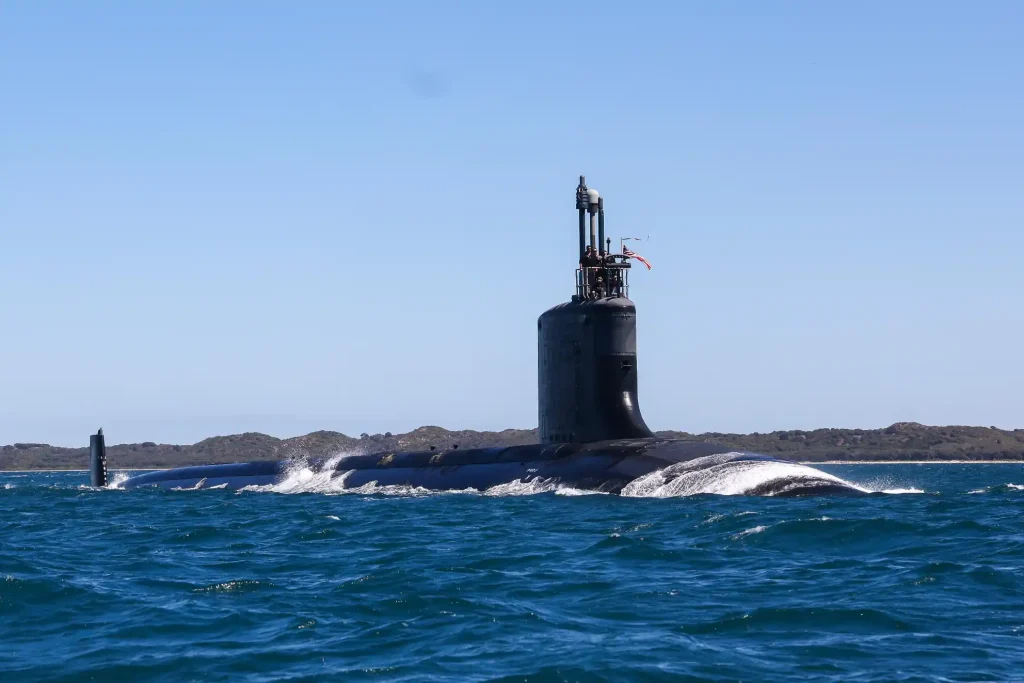
The deal, set to be highlighted during German Chancellor Friedrich Merz’s visit to India next week, is expected to include, for the first time, a transfer of submarine production technology to India.
Currently, India operates about a dozen older Russian submarines and six newer French-made models. If the agreement proceeds, plans to purchase three additional French submarines could be scrapped. Germany’s Thyssenkrupp Marine Systems and India’s state-owned Mazagon Dock Shipbuilders will collaborate to build the vessels, the sources said.
During his first official visit to India, Merz will meet Prime Minister Narendra Modi in Gujarat before traveling to Bengaluru to engage with German companies. Discussions are expected to cover expanded cooperation in both defense and pharmaceuticals, as well as accelerating EU-India free-trade negotiations.
The submarines will feature air-independent propulsion systems, allowing them to stay submerged longer than traditional diesel-electric vessels. This enhancement will strengthen India’s capacity to monitor and secure the Indian Ocean amid growing Chinese activity.
A spokesperson for Thyssenkrupp Marine Systems declined to comment. India’s Defense and External Affairs ministries did not immediately respond to requests for comment.
The deal highlights growing defense collaboration between the two countries. New Delhi has actively encouraged global defense firms to partner with Indian companies and transfer technology, a policy reinforced in 2020 when the Modi government restricted imports of key platforms like fighter jets, helicopters, artillery, and warships to boost domestic production.
Despite these efforts, India remains the world’s second-largest importer of military hardware, with Russia being its main supplier, according to the Stockholm International Peace Research Institute. Germany’s willingness to share advanced technology also reflects Berlin’s strategy to reduce India’s reliance on Russian weaponry following Russia’s invasion of Ukraine.
