


Adani Group is urging the central government to expand international flying rights, saying greater access is vital to increase passenger traffic at the eight airports it operates. The company is investing billions of dollars in new terminals, runways, and passenger facilities across these airports.
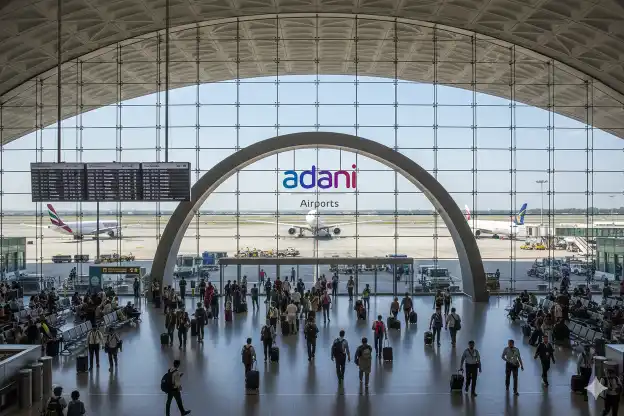
According to reports, this push puts Adani at odds with India’s two largest airlines, Air India and IndiGo, which have cautioned the government to move carefully on opening air traffic rights to foreign carriers. Air India has warned that rapid liberalisation could expose Indian airlines to what it calls “unfair competition” from well-funded West Asian carriers.
Adani Airports Holdings has requested the government to begin negotiations with countries including the UAE, Saudi Arabia, Qatar, Singapore, Indonesia, and Malaysia to expand bilateral flying rights. The group, which recently started operations at Navi Mumbai airport on Christmas Day, told the government that higher international capacity would help Mumbai develop as a global aviation hub.
The company plans to invest $11.1 billion by 2030 on airport infrastructure, including terminals, runways, aircraft-handling facilities, and passenger amenities, according to Jeet Adani, director at Adani Airport Holdings. A company official added that limiting capacity would be “a criminal waste of assets” and would hurt passengers through higher fares and fewer flight options. The official said transforming Indian airports into global hubs requires broader access and more choices for travellers, rather than waiting for domestic airlines to feel ready to compete.
International flying rights are governed by reciprocal bilateral agreements. Since 2014, successive Modi-led governments have taken a conservative approach toward expanding rights for foreign airlines, especially those from West Asia. The stated aim has been to protect Indian carriers and develop domestic hubs similar to Dubai or Singapore’s Changi Airport.
Under the 2016 National Civil Aviation Policy, additional rights for foreign airlines are considered only after Indian carriers have utilised at least 80% of their existing entitlements. As a result, foreign airlines have been unable to expand capacity despite growing demand, pushing up airfares. For example, additional seats on Dubai routes have not been added since 2014. While Indian carriers and Gulf airlines such as Emirates and flydubai have fully used their current rights, the government has not approved further expansion.
New Delhi’s cautious approach stems from concerns that more passengers could shift to Gulf airlines, which operate large wide-body fleets and can funnel travellers to Europe and North America via hubs like Dubai, Abu Dhabi, and Doha. Air India CEO Campbell Wilson noted that in some cases, over 70% of passengers carried by foreign airlines from India are transit travellers. He argued that any liberalisation should proceed at a pace that does not undermine the investments made by Indian airlines.
However, this cautious approach also risks leaving new airport infrastructure underutilised. Air India and IndiGo currently do not have aggressive international expansion plans, meaning much of the additional capacity being created at major Indian airports could remain unused, according to reports.
