


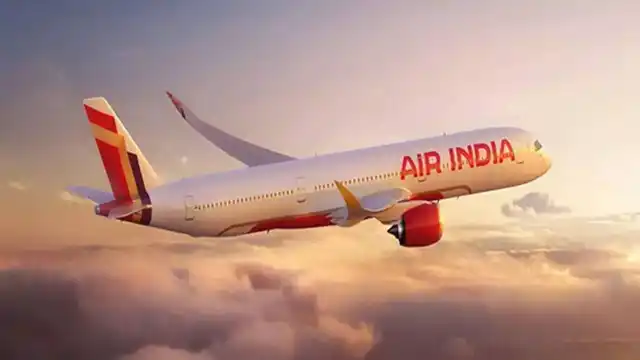
Tata Group-owned Air India is set to receive its first Boeing 787-9 Dreamliner, registered VT-AWA, in the coming weeks (Q1 2026), marking a major step in expanding its wide-body fleet. The aircraft will support growing long-haul demand from key hubs such as Delhi (DEL) and Mumbai (BOM).
Delivery and Fleet Expansion
Boeing confirmed that the aircraft delivery is expected before the end of the current quarter, with production already underway for subsequent units. The induction is part of Air India’s 2023 mega order of over 200 Boeing aircraft, aimed at modernizing its international operations. The 787-9 will be the first of 20 units scheduled to join the fleet over the next two years.
Aircraft Features
The Boeing 787-9 is a twin-aisle, long-range wide-body aircraft positioned between the smaller 787-8 and larger 787-10. Compared to the 787-8, it has a longer fuselage, higher payload capability, and greater range. Air India’s 787-9s will feature an updated cabin layout, including an expanded premium economy section and upgraded business class product.
Built with advanced composite materials, the 787-9 is around 20% more fuel-efficient than older wide-body aircraft. Next-generation engines reduce fuel burn, emissions, and noise. The aircraft has a range of roughly 7,565 nautical miles, enabling nonstop flights to Europe, East Asia, and North America. Initial operations are expected on long-haul routes from Delhi and Mumbai.
Passenger Comfort
Enhanced passenger experience includes larger windows, improved cabin pressurization, advanced air filtration, and higher humidity levels, all designed to reduce fatigue on flights exceeding ten hours.
Fleet Strategy
Air India plans to induct six new wide-body aircraft in 2026, including Boeing 787-9s and Airbus A350-1000s, while returning older leased planes. This strategy will keep overall fleet size stable but significantly lower the average fleet age, helping address the gap between international demand and available capacity on high-yield routes.
Industry Considerations
Boeing noted that aircraft delivery alone does not guarantee capacity growth. Airport infrastructure, landing and parking slot availability, regulatory approvals, pilot availability, and engine maintenance continue to influence deployment speed. Boeing has also implemented production improvements over the past 18 months to enhance safety, quality control, and delivery reliability, reaffirming its commitment to supporting airline customers with consistent fleet support.
