


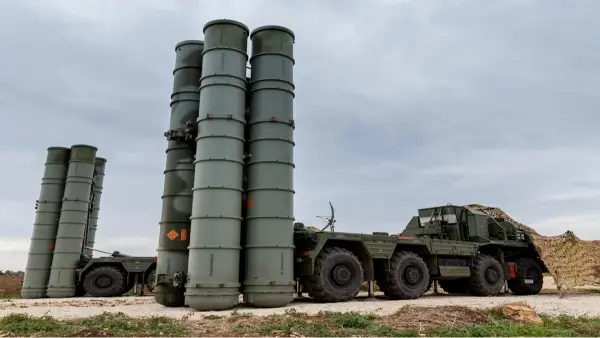
Russian defence major Almaz-Antey has agreed to collaborate with an Indian partner to set up a full-fledged Maintenance, Repair, and Overhaul (MRO) facility for the S-400 Triumf air defence system, known in India as the Sudarshan Chakra. The facility is expected to be fully operational by 2028, ensuring long-term serviceability of India’s most advanced surface-to-air missile system.
Domestic Servicing and Reduced Downtime
Once functional, the facility will allow Indian engineers to conduct routine maintenance, complex repairs, and system overhauls in-country. Currently, key components are often sent back to Russia for servicing, causing extended downtime. Localising these capabilities will drastically reduce turnaround times and help the Indian Air Force (IAF) maintain peak operational readiness.
Enhancing India’s Area Denial Capabilities
The S-400 is central to India’s air defence strategy, capable of neutralising hostile aircraft, drones, and missiles at ranges up to 400 km. Establishing a domestic MRO hub mitigates risks from global supply chain disruptions, such as those seen during the Ukraine conflict, which previously delayed spare parts and deliveries.
Supporting Make in India and Skill Development
For Almaz-Antey, the partnership strengthens the Indo-Russian defence relationship while supporting India’s “Make in India” initiative. The project includes transferring technical know-how and creating a local sustainment ecosystem. Indian technicians and engineers will be trained in advanced electronics and radar systems, creating a permanent pool of expertise for the S-400 program.
Operational Timeline and Strategic Impact
India has already deployed three of the five contracted S-400 squadrons along critical frontiers, with the remaining two expected by 2026-27 due to Russia’s own commitments. The MRO facility will be ready just as the full fleet becomes operational, reducing reliance on foreign support and ensuring long-term strategic security.
Building a Self-Reliant Defence Infrastructure
The indigenous MRO hub represents a key step toward strategic autonomy, enabling India to maintain its most valuable air defence assets locally. The project will not only strengthen operational readiness but also act as a catalyst for skill development and indigenisation within India’s defence industrial base.
