


Saudi Arabia and the United Arab Emirates have increased checks on Pakistani citizens amid rising concerns about organised begging and criminal activities abroad, a trend Pakistani authorities say is damaging the country’s reputation internationally.
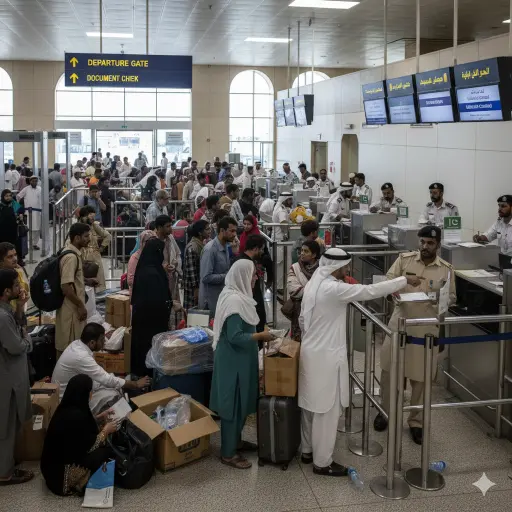
This year alone, Saudi Arabia has deported 24,000 Pakistanis over allegations of begging, while the UAE has restricted visas for most Pakistani citizens, citing cases of involvement in criminal activities after arrival. Azerbaijan has also deported around 2,500 Pakistani nationals for similar reasons.
Data from Pakistan’s Federal Investigation Agency (FIA) highlights the scale of the issue. In 2025, Pakistani authorities intercepted 66,154 passengers at airports to curb organised begging networks and prevent illegal migration.
FIA Director General Riffat Mukhtar said these networks are harming Pakistan’s international image. He added that the problem extends beyond the Gulf, with similar cases reported in Africa and Europe, as well as misuse of tourist visas in countries like Cambodia and Thailand.
The issue has drawn the attention of Saudi authorities for several years. In 2024, Riyadh formally urged Pakistan to prevent beggars from exploiting Umrah visas to solicit alms in Mecca and Medina. The Saudi Ministry of Religious Affairs warned that failure to curb the practice could affect the status of Pakistani pilgrims for Umrah and Hajj.
Legal experts in Pakistan have described begging as an organised business rather than an act of desperation. Attorney Rafia Zakaria wrote in Dawn that the begging industry is highly structured and has even expanded internationally. She noted that during Hajj, beggars harass pilgrims outside holy sites in Mecca and Medina, similar to their operations in Pakistani markets.
Government officials have echoed these concerns. In 2024, Secretary of Overseas Pakistanis Zeeshan Khanzada estimated that around 90% of beggars detained in West Asian countries were Pakistani nationals.
