


ISRO has scheduled seven launches by March next year, including missions to test indigenous electric propulsion systems for satellites, demonstrate quantum key distribution technologies, and conduct the first uncrewed flight of the Gaganyaan human spaceflight project. The first of these launches is expected next week.
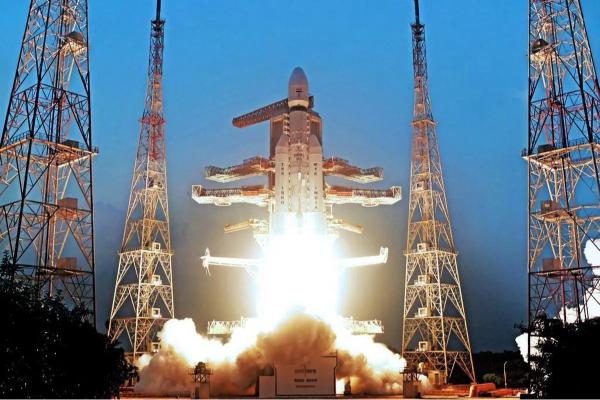
Union Minister Jitendra Singh told Parliament that India’s heaviest rocket, LVM3, will deploy the Bluebird-6 communication satellite for US-based AST Spacemobile under a commercial arrangement with ISRO’s New Space India Limited (NSIL). Early next year, the human-rated LVM3 will carry Gaganyaan’s first uncrewed mission, featuring the robot “Vyommitra” onboard the crew module. Another uncrewed mission is planned before Indian astronauts are sent into low Earth orbit in 2027.
The first uncrewed Gaganyaan flight will validate the complete mission sequence, including vehicle aerodynamics, orbital module operations, re-entry, and crew module recovery.
Next year will also see the launch of India’s first industry-built PSLV, which will place the Oceansat satellite, along with the Indo-Mauritius Joint Satellite and Dhruva Space’s LEAP-2, into orbit. To boost commercial satellite launches, NSIL has contracted a HAL-L&T consortium to produce five PSLV rockets under a technology transfer agreement.
ISRO will also launch an earth observation satellite (EOS-N1) for a strategic user, along with 18 smaller satellites from Indian and international clients. The GSLV-Mk II rocket is slated to deploy the EOS-5 or GISAT-1A satellite, replacing GISAT-1, which failed in 2021.
The PSLV63 mission will carry the TDS-01 satellite to demonstrate high-thrust electric propulsion, quantum key distribution, and indigenous travelling wave tube (TWT) amplifiers. High-thrust electric propulsion is expected to reduce satellite weight and chemical fuel dependency, enabling lighter satellites to match the performance of heavier ones. For instance, a typical four-tonne communication satellite requires over two tonnes of fuel, whereas an electrically propelled satellite would need just 200 kg.
The indigenous TWT amplifier will enhance India’s self-reliance in critical satellite transponder technologies. Additionally, a dedicated satellite will be launched using the Small Satellite Launch Vehicle (SSLV) before March 2026.
