


IIT Kharagpur holds a unique place in India’s educational history as the country’s first Indian Institute of Technology and the seed of a system that would shape India’s scientific and industrial progress.
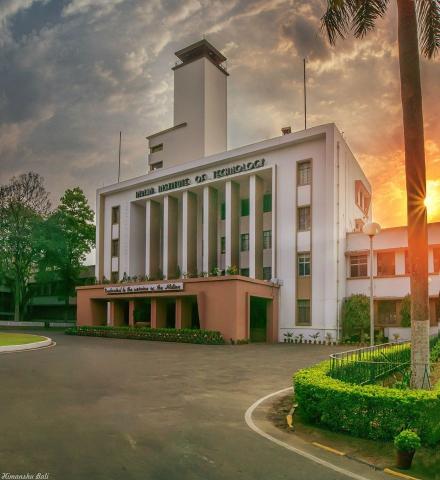
Founded in 1951, the institute began its journey at the Hijli Detention Camp, a site steeped in national memory. Once used to detain freedom fighters, this location became the foundation for India’s technological future, giving IIT Kharagpur an identity unmatched by any other IIT.
The creation of IITs emerged from India’s post-independence need to rebuild. The government sought institutions that could meet the country’s growing demands in engineering, research, and industrial development. Following the recommendations of the Sarkar Committee, which drew inspiration from global standards like those of MIT, IIT Kharagpur became the first step in implementing that vision.
The West Bengal government offered the unused Hijli Detention Camp for the institute. Repurposing a site of struggle into a technical institute symbolised independent India’s commitment to building opportunities from its past. Dr. J.C. Ghosh became the first Director, and although initial infrastructure was limited, the focus was clear: students would receive a balanced education combining classroom learning with practical training.
The first academic programmes included civil, mechanical, electrical, and metallurgical engineering, with workshops and laboratories forming the core of early education. As the institute grew, it took on a broader national role, culminating in the passing of the IIT Act in 1956. This legislation granted IIT Kharagpur the status of an Institute of National Importance, formalised governance structures, ensured academic autonomy, and set the blueprint for future IITs.
The permanent campus developed around the old Hijli building in phases, adding hostels, classrooms, laboratories, research centres, and facilities for sports and cultural activities. New departments, including architecture, mining, and aerospace engineering, were established to meet evolving national needs. Partnerships with industry and government strengthened research, making IIT Kharagpur a hub for testing new ideas and technologies.
Students from across India came to study here, turning the institute into a national centre for engineering talent. Early graduates played pivotal roles in India’s industrial and scientific programmes, joining public sector enterprises, research institutions, universities, private firms, or launching their own ventures. The model established at Kharagpur guided the creation of IIT Bombay, IIT Madras, IIT Kanpur, and others.
Today, IIT Kharagpur remains a premier institution. Its deeper significance lies in its origin: transforming a former detention camp into a world-class centre of learning and innovation, marking the beginning of India’s journey in technical education.
