


India has a pivotal role in shaping the future of space, not just for itself but for the world, said astronaut and test pilot Prasanth Balakrishnan Nair at Huddle Global 2025 in Kovalam. He emphasized that as nations advance plans for space colonization, the world will look to India to represent broader global interests in outer space.
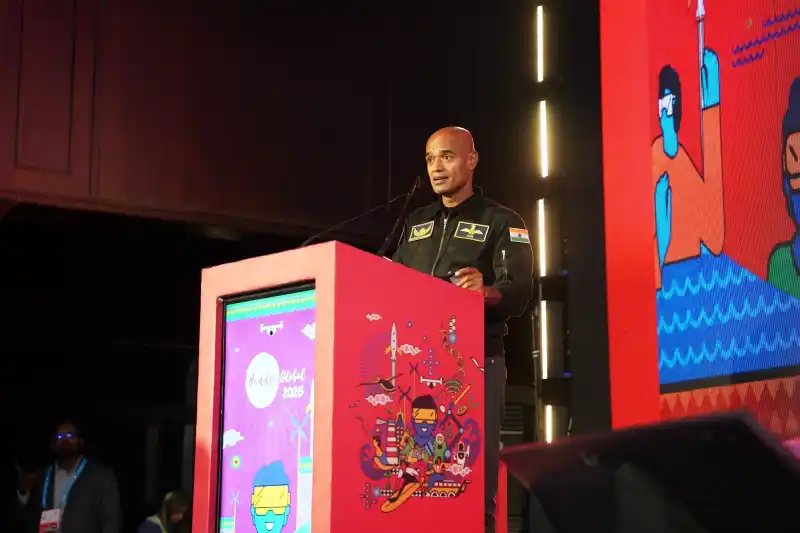
Speaking on the theme “Astronaut Mindset Towards Nation Building,” Nair highlighted that Indians already contribute roughly 30 percent of the global space workforce, with many professionals employed at leading centers like NASA. “India must develop its own capabilities in space rather than only supporting others. Missions like Gaganyaan and Chandrayaan will showcase India’s expertise to the world,” he added.
He encouraged startups and Indian enterprises to explore opportunities beyond rockets and satellites, focusing on human-centric innovations in space. For example, all manned missions still rely on Russian-designed space toilets—a technology NASA has struggled to replace. Nair suggested that solving such practical challenges should become a hallmark of Indian space startups.
Drawing parallels between astronauts and startup founders, he noted that astronauts train in multiple disciplines—mechanical repair, medical support, and food preparation—to perform effectively in space. Similarly, startup founders should develop multi-disciplinary skills to understand and support their teams better.
Nair also lauded India’s achievements in space, pointing out that unlike developed countries that rely on heavily funded public-private partnerships, India has succeeded through the excellence of its scientists despite limited resources. “Startups and enterprises are critical to establishing India as a global space power,” he said.
The session preceding his speech highlighted this potential, featuring four Indian hardware-focused startups: AI semiconductor startup Netrasemi, Genrobotics, EyeROV, and Asimov Robotics. Founders Jyothis Indirabhai, Vimal Govind, Johns T Mathai, and Jayakrishnan T shared their journeys and urged other entrepreneurs to create solutions that serve the nation and contribute to India’s vision of becoming a developed nation by 2047.
